
A professional drywall service works thoughtfully and follows much-needed steps. They repair seams and fill all nail holes. After removing any dents, they sand the surface and apply primer. Skipping any of these steps can leave visible imperfections in the finished wall.
This guide explains how a drywall service creates a smooth surface ready for paint. You will also learn how smooth your walls need to be and what to ask when hiring someone for this task.
Why Paint Shows Every Flaw
Light is the main reason. Tiny shadows appear when light hits the wall from the side. This makes the bumps clearly visible. Professionals call this process raking light.
You can test your own walls. Turn off the room lights and hold a bright flashlight flat against the wall. Move it slowly. Seams, dents, and popped screws will jump out.
Then run your hand over the same spots, since fingers catch things eyes miss. Mark each flaw with a pencil. That’s your repair list.
What a Drywall Service Does, Step by Step
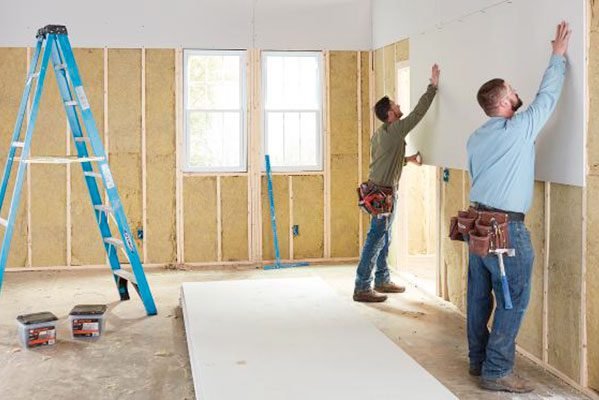
Every drywall service job usually goes in this order.
1. Fix the cause
Popped screws get pushed back in. Loose or bubbled tape is cut out and replaced. Cracks are opened up a little and filled so they don’t come back.
2. Apply joint compound in thin coats
Joint compound is the paste that fills seams and holes. A finisher puts on two or three coats, and each one is wider than the last. This is called feathering, and it blends the repair into the wall so you can’t see where it ends.
Thin coats take longer because each layer has to dry. A thick coat shrinks and cracks. This makes it hard to sand flat.
3. Sand and clean
Fine sandpaper smooths each coat without tearing the paper on the board. Drywall dust has to be wiped or vacuumed off. This dust can make the paint feel gritty.
4. Prime
Joint compound and drywall paper absorb paint at different rates. Without primer, patched areas can look dull or uneven even when the same paint color covers the entire wall.
Why Primer Matters
Painters call this flashing. Drywall primer helps create a more uniform surface. It allows paint to dry with a more consistent appearance.
How Smooth Should the Wall Be?
The Gypsum Association sets the industry standard for drywall finishing. It lists six finish levels, from 0 to 5. These are the ones homeowners run into most:
| Level | What it means | Best for |
| 3 | Two coats of compound over the joints | Surfaces receiving heavier texture |
| 4 | Three coats of compound over the joints | Many walls receiving flat or matte paint |
| 5 | A thin skim coat over the whole wall | Projects requiring a more uniform surface, especially under critical lighting |
Level 5 costs more, but it’s worth asking about if your wall gets a lot of side light.
Kitchens and bathrooms often need a shinier paint. That makes a smooth finish even more important in those rooms.
Drywall Texture Types: Smooth or Textured?
Texture is another way to handle walls that aren’t perfect. These are the drywall texture types you’ll hear about most:
- Orange peel: A light spray with small bumps which resembles an orange peel.
- Knockdown: Sprayed compound is flattened with a trowel. It looks mottled.
- Skip trowel: Put on by hand, so it looks soft and layered.
- Smooth: No texture. It looks clean and modern. It might show every flaw.
Wall texture can improve a room’s appearance and hide some minor imperfections, but it’s hard to remove later. Matching it on a patch takes skill. If your wall is textured, tell your contractor before they start. A flat patch on a knockdown wall stands out.
Drywall Remodeling Services: When It’s More Than a Patch
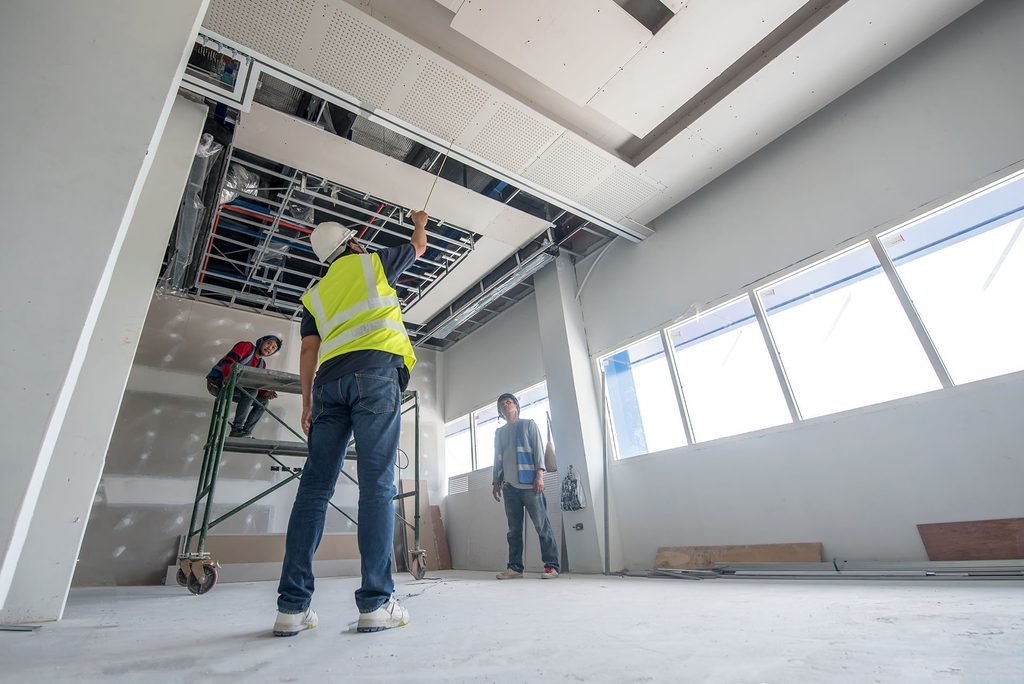
Bigger projects fall under drywall remodeling services. That means taking out a wall, adding a doorway, or replacing sections damaged by water.
New drywall still has to be taped, coated, sanded, and primed. The line between new and old needs extra care so it doesn’t show through the paint.
In wet areas, tile goes over cement board or another moisture-resistant backer. These are not placed on regular drywall. Read about our Tile Installation Service if tile is part of your plan.
Older Homes in Huntington Beach
A lot of homes in Huntington Beach and nearby cities were built decades ago.
Walls of such homes get hairline cracks in the corners and above doors. Old repairs also start showing when new paint is applied. See our page on Home Repair in Huntington Beach, CA for small fixes.
Lead paint
If your home was built before 1978, the paint may contain lead. Federal EPA rules say contractors who disturb paint in those homes have to use lead-safe methods. Ask about it.
Popcorn ceilings
Old homes with popcorn ceilings may contain asbestos. Get the material tested before anyone scrapes or sands it.
Leaks
If a stain came from a leak, fix the leak first. Painting over a damp spot only traps the problem.
DIY or Drywall Painting Contractor?
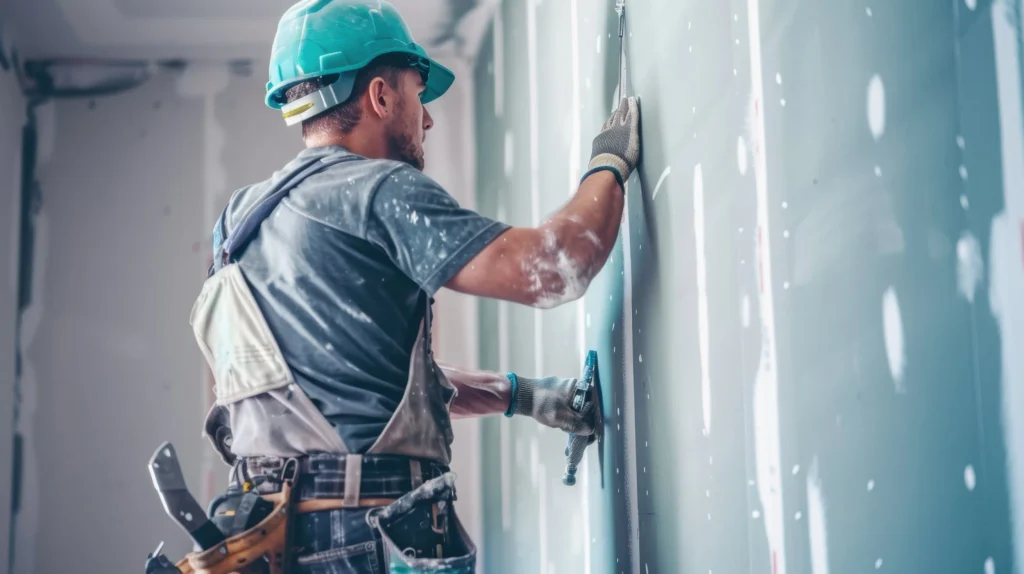
Small nail holes and dings are fine to do yourself. You need a little filling compound and a little sanding. Prime it after making it smooth.
Larger jobs are better left to a professional. That includes long seams, ceilings, large patches, matching texture, or smoothing a whole room. Ceilings are the hardest, because they’re tiring to work on and show every flaw in side light.
A drywall painting contractor who does both the finishing and the painting has one clear advantage. One crew is responsible for the final result. When the finisher and the painter are two different people, a flaw can turn into an argument about whose job it was.
Finding a Drywall Finisher Near Me: What to Ask
Search “drywall finisher near me” and you’ll get a ton of results. These questions help narrow them down:
- What level will you do? Do you think my walls need a skim coat?
- How many coats of compound, and how long between them?
- How will you control drywall dust during the work?
- Can you match what I have now?
- Do you prime and paint too, or only finish the drywall?
- What’s included?
- What’s your California contractor license number? (You can check it on the state contractor board’s website.)
- If my house was built before 1978, how do you handle lead-safe work?
Get the answers in writing.
Final Thoughts
Smooth paint comes from smooth walls. Smooth walls come from patient prep work. It includes thin coats, careful sanding, and good primer. Rush any of those, and it shows later, usually when the sun hits the wall at an angle.
If your walls need more than a quick patch, Romans Handymen can help. Learn more about our Professional Handyman Services then tell us what you’re seeing on your walls.
One Response