
Fresh interior painting can make a whole house feel new. Then real life starts. Fingerprints show up by the light switches, the hallway gets scuffed, the bathroom ceiling turns spotty, and the living room wall that gets afternoon sun starts to look a shade lighter than the rest.
The good news is that most of that wear can be slowed down, and much of it can be fixed without repainting a whole room. In this guide, the Roman’s Handyman team shares nine interior painting tips we use in Orange County homes, from choosing the right sheen to cleaning, touch-ups and knowing when it is time to bring in home painting services.
The quick answer:
- Pick a washable sheen for busy rooms, like satin or semi-gloss, and save flat paint for ceilings and low-traffic walls.
- Let new paint cure for two to four weeks before you scrub it.
- Dust walls monthly and wash them gently about twice a year with mild soap and water.
- Spot-clean marks early, and always test a cleaner in a hidden area first.
- Keep moisture, sun and bumps in check, and keep labeled leftover paint for touch-ups.
Why Interior Paint Wears Out Faster Than It Should
Interior paint is tougher than it looks, but a few everyday things break it down early. Here is what we see most often in homes from Huntington Beach to Costa Mesa:
- The wrong sheen for the room. Flat paint in a kitchen or kids’ room cannot handle regular wiping.
- Skipped prep. Paint over dust, grease or unprimed patches does not bond well and starts to peel or flash.
- Moisture. Steamy bathrooms, cooking and the coastal air near the beach lead to mildew and bubbling.
- Sunlight. Strong Southern California sun fades colors on walls that face big windows.
- Harsh cleaning. Scrubbing pads, ammonia and strong degreasers can dull or burnish the finish.
Each of the tips below targets one of these problems, so your interior painting lasts as long as possible.
9 Interior Painting Tips to Keep Your Walls Looking New
1. Choose the Right Paint Sheen for Each Room
The sheen you choose decides how well a wall stands up to cleaning. In general, the shinier the paint, the more washable it is, but the more it shows flaws in the wall.
| Sheen | Best for | Washability |
| Flat or matte | Ceilings, formal living rooms, adult bedrooms | Low. Light dusting and gentle spot-cleaning only |
| Eggshell | Living rooms, dining rooms, bedrooms | Moderate. Handles gentle wiping |
| Satin | Hallways, family rooms, kids’ rooms, laundry rooms | Good. A solid choice for busy areas |
| Semi-gloss | Bathrooms, kitchens, trim, doors, cabinets | High. Stands up to regular washing |
| Gloss | Trim, railings, high-wear accents | Very high, but shows every dent |
If you are repainting a high-traffic room, moving up one sheen level, for example from eggshell to satin, is one of the easiest ways to keep the walls looking new for longer.
2. Prep, Prime and Let New Paint Cure
Most interior painting failures start before the first coat goes on. Walls should be clean, dry and dull, with holes and cracks patched, sanded and spot-primed. Primer seals patches so they do not show through as dull spots, and it helps new paint grip glossy or stained surfaces.
Just as important is patience after painting. Latex paint feels dry in an hour or two, but it keeps hardening for weeks. Most manufacturers suggest waiting about two to four weeks before you wash or scrub new paint. Until then, avoid hanging heavy decor, leaning furniture on the wall or wiping anything harder than a quick dab.
3. Dust Your Walls Once a Month
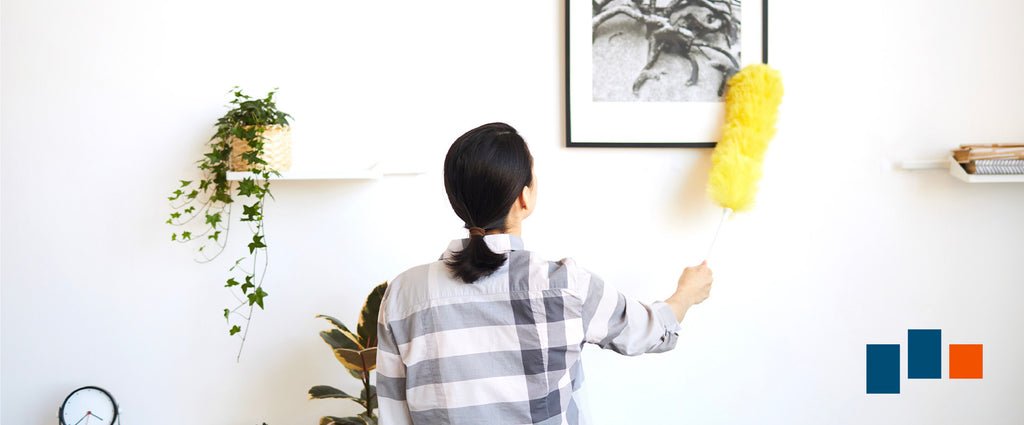
Dust and cobwebs dull a paint finish and turn into grime once they mix with moisture or cooking oil. Once a month, run a microfiber cloth, a dry dust mop or a vacuum brush attachment over the walls, starting at the top. Pay extra attention to corners, the tops of baseboards, door frames and the ceiling line, where dust collects first.
4. Wash Walls Gently, About Twice a Year
A light wash every six months or so keeps busy rooms looking fresh. Here is the method we recommend:
- Lay a towel or drop cloth along the baseboard and move furniture away from the wall.
- Mix a few drops of mild dish soap in a bucket of warm water. Keep a second bucket of clean water for rinsing.
- Wring out a soft sponge until it is damp, not dripping, and wash in small sections with light, circular strokes.
- Wipe each section with a clean, damp cloth, then dry it with a soft towel.
- On flat and matte walls, skip the full wash and just spot-clean. These finishes can streak or shine when rubbed.
Avoid ammonia, bleach, abrasive powders and scrub pads on painted walls. They can strip color and leave shiny, burnished patches that are hard to fix without repainting.
5. Spot-Clean Marks Early and Test First
Crayon, scuffs, food splashes and fingerprints are easier to remove when they are fresh. For most marks, start with a damp cloth and a drop of dish soap. For stubborn scuffs, a paste of baking soda and a little water, rubbed very gently with a fingertip or soft cloth, often does the job.
Melamine foam sponges, often sold as magic erasers, work well on semi-gloss and gloss paint but act like fine sandpaper. On flat or eggshell walls they can leave a shiny spot. Whatever you use, test it first on a hidden area, such as behind a door or inside a closet.
6. Keep Moisture and Mildew in Check
Moisture is the biggest enemy of interior painting in bathrooms, kitchens and laundry rooms. Steam soaks into paint, and over time it leads to peeling, bubbling and dark mildew spots, especially on ceilings. Near the coast, damp air makes this even more common.
- Run the bathroom fan during every shower and for 20 to 30 minutes after.
- Use the range hood when you cook, especially when boiling or frying.
- Wipe condensation off windowsills and walls when you see it.
- Fix leaks under sinks and around tubs right away, before they reach the drywall.
- Use a mildew-resistant bathroom paint in a satin or semi-gloss sheen when you repaint.
If mildew keeps coming back, or the paint is peeling in sheets, it is usually a sign the room needs better ventilation or a deeper fix. Many homeowners pair a fresh paint job with a full update, and our guide to Bathroom Remodeling Design and costs walks through what a bathroom upgrade looks like in 2026.
7. Protect Walls From Sun and Everyday Bumps
Southern California sunshine is great for your mood but hard on paint. UV light slowly fades color, so a sunny wall can end up a shade lighter than the wall next to it. Blinds, sheer curtains or UV-filtering window film can slow fading a lot. Rearranging art and furniture now and then also helps the wall age more evenly.
For bumps and scuffs, small changes go a long way:
- Add door stops or wall bumpers behind doors that swing hard.
- Put felt pads on the backs of chairs that touch the wall.
- Leave a few inches between furniture and the wall.
- Consider a chair rail or wainscoting in dining rooms and hallways.
- Use proper wall anchors for shelves, TVs and mirrors so they do not pull or crack the paint.
8. Do Touch-Ups the Right Way
A touch-up should disappear, not leave a patch that looks shinier or darker than the rest of the wall. That effect is called flashing, and it is the most common touch-up problem. A few habits make all the difference:
- Keep leftover paint in a sealed, labeled can with the room, brand, color name, sheen and date.
- Store it indoors, away from heat and freezing temperatures.
- Stir it well before use, and use the same type of tool as the original job, a roller for walls and a brush for trim.
- Apply a thin coat and feather the edges outward so there is no hard line.
- If a touch-up still shows, repaint the whole wall from corner to corner instead of adding more patches.
Small dents and nail holes should be filled, sanded and spot-primed before the touch-up, or they will show through the new paint.
9. Know When It Is Time to Repaint
Even with great care, interior paint does not last forever. Most homes need fresh interior painting every five to ten years. Hallways, kids’ rooms and kitchens may need it every two to four years, while ceilings and low-use rooms can go longer. Watch for these signs:
- Peeling, cracking or bubbling paint
- Faded or uneven color, especially on sunny walls
- Stains, marks or water spots that no longer wash off
- Visible touch-ups or patches that make the wall look blotchy
- Dated colors before a sale, move-in or rental turnover
Interior Painting Cost in Orange County: What to Expect
Interior painting cost depends on room size, wall condition, ceiling height, the number of colors and how much prep and repair is needed. Labor and material prices in Orange County tend to run above national averages. These ranges are rough guides, not quotes:
| Project | Typical range (professional) | Notes |
| Touch-ups and small repairs | $150 to $400 | Patch, prime and touch up several spots in one visit |
| Single room, walls only (about 12 x 12 ft) | $400 to $1,000 | Ceiling, trim and doors usually extra |
| Ceiling | $200 to $600 per room | More for high or textured ceilings |
| Whole-home interior | About $2 to $6 per sq. ft. of floor area | Varies with prep, colors and finish level |
Bundling several small painting and repair jobs into one visit is an easy way to save, since setup and cleanup are shared.
DIY or Interior House Painters Near Me: When to Call a Pro
Dusting, washing and small touch-ups are easy weekend tasks. But when people search for “interior house painters near me”, it is usually because the job has gone past a quick fix. Professional home painting services are worth it when:
- Walls need patching, sanding and priming before paint, not just a fresh coat.
- There are high ceilings, stairwells or tall walls that need ladders or scaffolding.
- Mildew, water stains or peeling paint point to a moisture problem.
- Touch-ups keep flashing and you want the whole wall to look even.
- You want a room painted fast and clean before a move, sale or guests arrive.
Businesses have different needs. Offices, retail spaces and rental units often call for commercial painting contractors who can work after hours, use low-odor products and choose scrubbable finishes for heavy traffic. For smaller commercial touch-ups and repairs, a handyman can often handle the work quickly.
In California, a handyperson without a contractor’s license can take on jobs under $1,000 in total, including labor and materials, that need no permit. Larger projects call for a licensed contractor, and you can check any license on the California Contractors State License Board website. If you live near the coast, learn more about our Home Maintenance Solutions in Costa Mesa, CA and the nearby cities we serve.
Frequently Asked Questions
How long does interior painting last?
Most interior paint looks good for five to ten years. High-traffic rooms like hallways, kitchens and kids’ rooms may need a fresh coat every two to four years, while ceilings can last ten years or more.
How soon can I clean freshly painted walls?
Wait about two to four weeks before washing or scrubbing new paint. It may feel dry within hours, but it needs time to fully cure and harden.
What is the best paint finish for interior walls that get dirty?
Satin works well for most busy living areas, and semi-gloss is best for bathrooms, kitchens, trim and doors. Both are much easier to wipe clean than flat or matte paint.
Why does my touch-up paint look different from the wall?
This is called flashing. It happens when the sheen, the tool or the paint batch is different, or when the old paint has faded. Feathering a thin coat helps, but sometimes repainting the whole wall corner to corner is the only way to make it match.
Can I use a magic eraser on painted walls?
Use it with care. Melamine sponges are mildly abrasive. They work on semi-gloss and gloss finishes but can leave shiny spots on flat or eggshell paint. Test in a hidden spot first.
Do I need to prime before interior painting?
Prime any patched areas, bare drywall, stains and glossy surfaces. Walls that are clean and painted with a similar color and type of paint often do not need a full primer coat.
Get a Free Quote for Interior Painting
Great interior painting is not only about the day the job is finished. With the right sheen, gentle cleaning, smart touch-ups and a little moisture control, your walls can look new for years. When it is time for repairs, prep or a fresh coat, Roman’s Handyman is ready to help.
Looking for trusted Handyman Services in Huntington Beach, CA? Call 714-728-1305 or email romanshandyman@gmail.com to book your free quote today.