
A doorknob slams into the hallway wall. A picture comes down and leaves a row of holes. A hairline crack creeps up from the corner of a window. Every home collects this kind of wear, and good drywall repair can make it disappear so well that no one ever knows it was there. The trick is matching the fix to the damage, then finishing the surface so the patch blends in with the rest of the wall.
In this guide, the Romans Handyman team shares the drywall repair ideas we rely on in Orange County homes, from tiny nail holes to water-stained ceilings. You will also find the best ways to fix cracks in drywall, typical drywall repair cost ranges, and clear signs that it is time to call a pro.
The quick answer:
- Fill nail holes and small dents with lightweight spackle, then sand, prime and paint.
- Cover holes up to about 6 inches with a mesh or metal patch and several thin coats of joint compound.
- Cut out large or soft, water-damaged areas and replace them with a new piece of drywall.
- Tape cracks instead of just filling them, or they will come back.
- Match the wall texture and prime the patch. These two steps are what make a repair invisible.
What Causes Drywall Damage in Orange County Homes?
Knowing why a wall got damaged helps you choose a repair that lasts. Here are the most common causes we see in homes from Huntington Beach to Costa Mesa:
- Everyday impact. Door handles, furniture, kids and pets cause most dents and holes.
- Settling and small earthquakes. Southern California homes move. That movement shows up as cracks at the corners of doors, windows and ceilings.
- Moisture. Leaky pipes, roof leaks and steamy bathrooms soften drywall and leave stains, bubbling paint or mold.
- Old repairs. Patches done without tape, primer or proper drying time tend to crack, sink or show through the paint.
- Popped nails and screws. As framing dries and shifts, fasteners push out and leave small round bumps.
7 Drywall Repair Ideas That Make Walls Look Brand New
These seven ideas cover almost every kind of residential drywall repair. Start with the one that fits your damage, and always finish with steps six and seven.
1. Fill Nail Holes and Small Dents With Lightweight Spackle
This is the simplest drywall repair of all. For holes smaller than a pencil eraser, you do not need a patch. Press a little lightweight spackle into the hole with a putty knife, scrape it flat, and let it dry. Light spackle shrinks less than heavy compound, so one or two coats is usually enough. Sand gently with fine 220-grit paper, wipe the dust, and spot prime before painting.
2. Use a Mesh Patch for Small Drywall Hole Repair
Drywall hole repair for doorknob-size holes, up to about 4 to 6 inches across, is easiest with a self-adhesive mesh or metal patch. Clean any loose paper and crumbs from the edges first. Stick the patch over the hole, then spread joint compound over it in thin coats, feathering each coat a few inches wider than the last. Three thin coats look far better than one thick one, which tends to crack and leave a bump.
3. Try a “California Patch” for Medium Holes
A California patch, sometimes called a butterfly patch, is a neat trick for holes in the 3 to 6 inch range. You cut a square of drywall a couple of inches larger than the hole, then peel the gypsum off the back edges so only the face paper remains as a flange. Trim the hole into a matching square, set the patch in with compound, and the paper flange acts as built-in tape. It creates a strong, flat repair without extra backing.
4. Cut In a New Piece for Large Holes
For holes bigger than about 6 inches, or for drywall that is crumbly or soft, cut the damaged section out into a clean square or rectangle. Screw wood or metal backing strips inside the opening, then screw in a new piece of drywall that matches the thickness of the wall, usually 1/2 inch in homes. Tape the seams, then apply two or three coats of compound, sanding lightly between coats. Before cutting, check for wires and pipes behind the wall.
5. Tape Cracks So They Stay Closed
Filling a crack with spackle alone almost never lasts, because the wall keeps moving. Instead, open the crack slightly with a utility knife, fill it, and embed paper or mesh tape over it. Then feather two more coats of compound over the tape. We cover cracks in more detail in the next section.
6. Match the Wall Texture
A perfect patch on a textured wall still stands out if the surface is smooth. Many Orange County homes have orange peel or knockdown texture, and these can be matched with spray texture cans for small spots or a hopper gun for larger areas. Practice on a scrap piece of cardboard first, and blend the edges lightly. If your walls are smooth, the goal is a flat, sanded finish with no ridges, and a pro’s Smooth Wall Finishing process can make a big repair vanish before paint.
7. Prime First, Then Paint the Whole Section
Joint compound soaks up paint differently than the rest of the wall. If you paint over it without primer, the patch can look dull or shiny, an effect called flashing. Use a drywall primer on the repair, then paint from corner to corner, or at least to a natural break like a door frame. This hides small color differences, even when you have the original paint. This last step is what separates an obvious patch from a drywall repair no one notices.
Best Ways to Fix Cracks in Drywall
The best ways to fix cracks in drywall depend on where the crack is and why it formed. Use this table as a guide:
| Crack type | Likely cause | Best fix |
| Hairline crack in the middle of a wall | Minor settling or a seam that was not taped well | Open slightly, fill, tape and feather two coats |
| Diagonal crack at the corner of a door or window | Normal house movement | Tape with mesh or paper tape. A flexible patching product can help |
| Crack along an inside corner | Seasonal movement where two walls meet | Remove loose tape, apply new paper corner tape, or use flexible caulk if painted |
| Crack along a ceiling seam | Truss movement or failed tape | Re-tape the seam. Recurring cracks may need a floating corner method |
| Wide, growing or stair-step cracks | Possible foundation or structural movement | Have the cause checked first, then repair the drywall |
A few more tips for crack repairs that last:
- Never caulk a flat wall crack and paint over it. It shows through and collects dust.
- Let each coat dry fully. Rushing is the top reason a drywall repair shrinks or cracks again.
- Take photos and mark the ends of a crack with a pencil. If it grows over a few weeks, call a professional.
Water-Damaged Drywall: Repair or Replace?
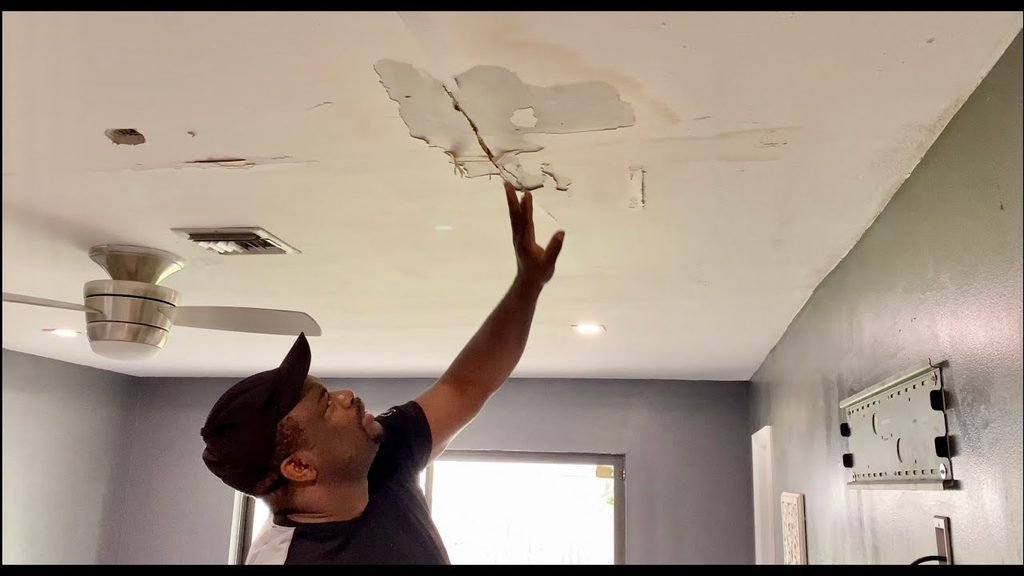
Water damage needs a different plan. Before any drywall repair starts, the leak must be found and fixed, and the area must dry fully. Then press on the stained area. If the drywall is firm and only the surface is stained, a stain-blocking primer and fresh paint may be all it needs.
If the drywall is soft, sagging, crumbling or has a musty smell, cut it out and replace it. Wet drywall can hold mold behind the surface, and patching over it traps the problem. Ceilings under bathrooms and around windows are the most common trouble spots we find.
Drywall Repair Cost: What to Expect
Drywall repair cost depends on the size of the damage, how many spots need work, the texture, and whether the area must be painted afterward. National cost guides put a typical professional repair somewhere between about $100 and $1,000, with many jobs landing in the middle. Prices in Orange County often sit toward the higher end because of local labor costs.
| Repair type | Typical range (professional) | Notes |
| Nail holes, dents, small cracks | $60 to $200 | Often done together on a single visit |
| Small drywall hole repair (up to about 6 in.) | $100 to $250 | Includes patch, mud, sanding and touch-up |
| Large hole or new drywall section | $250 to $600+ | Depends on size, texture and painting |
| Water-damaged wall or ceiling | $300 to $1,000+ | Leak repair and mold work are extra |
| Hourly labor | About $60 to $100 per hour | Many pros charge a minimum visit fee |
These ranges are rough guides, not quotes. Your price depends on the home, the access, and how much finishing is needed. Bundling several small repairs into one visit is one of the easiest ways to lower your drywall repair cost, since setup and drying time are shared.
DIY or Residential Drywall Repair Pro: When to Call for Help
Nail holes and small dents are a fine weekend project. But residential drywall repair is usually worth handing to a pro when:
- The hole is larger than your hand, or the patch sits in a spot everyone sees, like a living room or entry.
- The wall has texture you cannot match, or the light hits it at an angle that shows every flaw.
- There is water damage, mold, or a soft spot on the ceiling.
- Cracks keep coming back or are getting wider.
- You need a whole room patched and painted before a sale, move-in or move-out.
In California, a handyperson without a contractor’s license can take on jobs under $1,000 in total, including labor and materials, that need no permit. Larger projects call for a licensed contractor, and you can check any license on the California Contractors State License Board website. If you live near the coast, you can learn more about our Professional Drywall Repair In Costa Mesa CA and the nearby cities we serve.
How to Keep Repaired Walls Looking New
Once your drywall repair is done and the walls look fresh again, a few simple habits keep them that way:
- Add door stops or wall bumpers behind doors that swing hard.
- Run bathroom fans during showers and for 20 to 30 minutes after to cut down on moisture.
- Use wall anchors rated for the weight of shelves, TVs and mirrors.
- Keep a labeled can of your wall paint for quick touch-ups.
- Fix small leaks right away, before they reach the drywall.
Frequently Asked Questions
Can drywall repair be made completely invisible?
Yes, in most cases. The keys are thin, feathered coats of compound, careful sanding, matching the texture, and priming before you paint. Painting the full wall section, not just the patch, helps hide any color difference.
How long does drywall repair take?
A small patch can be done in a day, but joint compound needs time to dry between coats. Larger repairs often take two to three days with drying, sanding, texture and paint.
What is the best way to fix a hole in drywall?
For small holes, use spackle. For holes up to about 6 inches, use a mesh patch or a California patch. For larger holes, cut in a new piece of drywall with backing strips behind it.
Why do drywall cracks keep coming back?
Cracks return when they are filled without tape, or when the house is still moving. Taping the crack and using thin coats helps. Wide or growing cracks should be checked for structural causes.
How much does drywall repair cost in Orange County?
Small repairs often fall between about $100 and $250, while larger or water-damaged areas can run several hundred dollars or more. The best way to know is to get a free on-site quote.
Should I repair or replace water-damaged drywall?
If the drywall is still firm and only stained, seal and paint it. If it is soft, sagging or moldy, cut it out and replace it after the leak is fixed and the area is dry.
About Romans Handyman
Romans Handyman serves homeowners in Huntington Beach, Costa Mesa, Newport Beach, Fountain Valley, Seal Beach and Long Beach. Along with drywall installation, drywall repair, patching and finishing for walls and ceilings, the team handles framing, tile installation and repair, bathroom remodeling, windows and doors, and woodwork and carpentry. Free quotes are available for every job.
Get a Free Quote for Drywall Repair
Holes, cracks and water spots do not have to be permanent. With the right patch, careful finishing and a good coat of paint, your walls can look brand new again. Whether you need one doorknob hole fixed or a whole room smoothed out before painting, Romans Handyman is ready to help.
Need trusted Drywall Repair in Huntington Beach, CA or nearby? Call 714-728-1305 or email romanshandyman@gmail.com to book your free quote today.